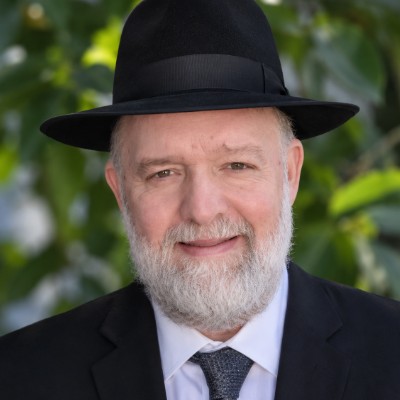
Rosh Yeshiva of Yeshivas Bais Moshe Chaim
Dedicate a Shiur in shiurim from Rabbi Akiva Zweig
L'ilui nishmas a loved one. In honor of a simcha or yahrzeit. As a zechus for a refuah sheleimah. Your dedication helps carry Rabbi Zweig's Torah to learners around the world.
AI search understands topics, Hebrew terms, parsha names, and concepts.
Why does the Amidah vary in length between weekdays and holy days, and why are there four distinct prayer services? The Ramchal's framework maps prayer structure onto the four spiritual worlds and shows how each service draws down divine influence appropriate to different times and spiritual states. This cosmic understanding transforms davening from routine recitation into conscious participation in sustaining creation.
How should the Ramchal's philosophical framework in Derech HaShem translate into daily practice? The shiur synthesizes 60 classes into actionable applications: transforming belief into knowledge-based conviction, making prayer genuine internalization rather than rote recitation, and defining maturity as choosing long-term spiritual gain over immediate pleasure. These principles reshape parenting, anger management, and our relationship with divine authority during both ordinary and tragic circumstances.
How can everything in creation serve God's purpose when so much seems mundane or even harmful? The Ramchal teaches that Divine help flows according to one's motivation toward God in every act—even drinking coffee becomes spiritual when done with proper intention. The Baal HaTurim's surprising reading that the brothers wished for Yosef's hatred shows how accepting consequences as part of God's plan leads to deeper teshuvah and ultimate redemption.
Why does the Ramchal say we use the Hebrew word 'ach' (but/only) specifically for Rosh Hashanah preparations? The shiur develops the Ramchal's principle that shofar doesn't just request mercy—it compels justice itself to demand mercy by rectifying rebellion through accepting God's kingship and awakening Avrohom's merit. When we embody divine attributes of mercy and judgment, justice rules we deserve similar treatment.
Why does Shacharit take the longest when all three daily prayers serve the same basic purpose? The Ramchal's framework in Derech HaShem reveals that each service channels divine sustenance to different aspects of creation - morning for the full day, afternoon for its remainder, evening for the dramatic day-night transition. This structure parallels the four spiritual worlds and explains why consistent, focused prayer affects all of existence.
Why is the weekday Shemoneh Esrei longer than Shabbos and holiday prayers? The Ramchal teaches that our daily prayers correspond to four cosmic worlds, requiring more effort to draw down divine influences on ordinary days. Each section - Karbanos, Pesukei D'Zimra, Shema, and Amidah - parallels a different spiritual realm, from physical to divine.
How does the structure of Shemoneh Esreh channel divine influences into creation? The shiur uses the Ramchal's Kabbalistic framework to show that each letter of the Tetragrammaton represents a divine attribute (chesed, din, rachamim, malchus) flowing through the prayer's blessings. This mystical understanding transforms tefillah into humanity's role of drawing heavenly influences down to earth rather than escaping worldly reality.
Why did Hashem structure day and night with different spiritual forces governing each period? The shiur develops the Ramchal's teaching that evil forces dominate until midnight, then divine illumination gradually strengthens until sunrise renews all creation. Our morning rituals become a cosmic reset - washing hands purifies not just ourselves but the entire world we represent.
Why is prayer necessary if Hashem already knows our needs? The Ramchal explains that prayer serves as the catalyst for receiving divine sustenance, distinct from the natural sustenance Hashem provides to all creation. Through meaningful tefillah, we can return to the pre-sin paradigm where Hashem bears the burden of our needs rather than relying solely on our own toil.
The Ramchal requires willingness to die for God's unity when reciting Shema, but how can we cultivate such resolve? Building on Rabbi Akiva's martyrdom, the shiur explains that genuine readiness counts as actual deed even without physical testing. This commitment adds spiritual light to creation and translates practically into making sacrifices for others, accepting divine providence without complaint, and living with constant appreciation.
Why doesn't Torah study automatically transform every student into a tzaddik? The Ramchal identifies two preconditions: approaching Torah with proper reverence and maintaining ongoing personal rectification. Without these, even divine Torah becomes ordinary human speech lacking transformative power.
What made Moshe's prophecy fundamentally different from all other prophets? The Ramchal explains that regular prophets received divine visions through dreams and allegories, like looking through cloudy lenses. Moshe remained fully conscious during 'mouth to mouth' communication with crystal clarity and could access all divine secrets voluntarily rather than receiving only what God chose to reveal.
How can someone distinguish between genuine prophecy and false revelation that mimics the real thing? The Ramchal explains that corrupting spiritual forces can create convincing deceptions, complete with miracles, that fool even sincere seekers. Today's practical application involves maintaining intellectual honesty and consulting Torah sources rather than seeking forbidden spiritual shortcuts.
How does a prophet develop their ability, and what can we learn for our own spiritual growth? The Ramchal teaches that prophecy requires gradual training under guidance, unlike spontaneous divine inspiration. Understanding this process helps us pursue our own closest possible relationship with Hashem through mitzvos, spiritual purity, and proper teachers.
What distinguishes divine inspiration from natural human reasoning? The Ramchal's framework shows that Ruach HaKodesh operates on multiple levels - from clear supernatural awareness to hidden influence that feels like natural thought. True prophecy represents the highest level: complete attachment to God where information becomes secondary to the divine connection itself.
How can supernatural forces transcend natural laws? The Ramchal identifies two forms of theurgy: direct divine connection through holy names and angelic coercion through specific procedures. While holy forces exist alongside their evil counterparts, we access transcendent power safely through ethical behavior and mitzvos rather than dangerous mystical practices.
How can humans actually manipulate spiritual forces to change the physical world? The Ramchal's concept of theurgy teaches that divine names, when uttered under specific conditions, create chain reactions through spiritual hierarchies that can suspend natural law. Prayer becomes our primary theurgical tool - literally enabling us to change nature through proper kavanah and adherence to Torah.
How do our souls function on multiple levels, and what really happens during sleep and dreams? The divine soul contains five interconnected levels that extend like a chain to Hashem, with the higher portions separating from the body during sleep to experience spiritual realms. Dreams can either reflect physical imagination or authentic spiritual perceptions from these soul journeys.
What makes human intelligence qualitatively different from animal intelligence? The Ramchal's yesod distinguishes between the animal soul (shared with all creatures) and the divine soul (unique to humans). When the divine soul properly directs the animal soul, it creates the capacity for spiritual awareness and influence that transcends natural intelligence.
How does Judaism view astrology given the prohibition against idolatry? The Ramchal's framework explains that stars serve as divinely-created conduits transmitting spiritual forces to the physical world, but Jews can transcend astrological influence through their direct relationship with God. This explains both why we say 'mazal tov' and the principle 'Ein mazal l'Yisrael.'
How can non-Jews achieve eternal life without converting to Judaism? The Ramchal's tree metaphor reveals that when nations rejected the Torah at Sinai, they were relegated to a lower spiritual level but retained divine souls. Through the seven Noahide laws, righteous gentiles can earn olam haba as an 'attachment' to Israel—making Judaism uniquely inclusive among world religions.
How can non-Jews achieve spiritual elevation when only Avrohom's descendants inherited his elevated spiritual genetics? The Ramchal's tree metaphor explains that converts can 'tear themselves loose' from their national roots and graft onto Avrohom's tree, becoming 100% Jewish. This distinction illuminates why conversion is irreversible and why converts deserve tremendous respect for their spiritual leap.
Why was Avrohom different from earlier righteous figures like Chanoch and Shem who also taught truth to the masses? The Ramchal explains that Avrohom uniquely embraced infinite spiritual transformation rather than just following rules, becoming the first to view himself on a path back to pre-sin perfection. This transformational mindset became the Jewish genetic code that distinguishes us from other nations.
Why do righteous people suffer when they seemingly deserve reward? The Ramchal's framework in Derech HaShem reveals two levels: suffering that atones for an entire generation, and higher suffering that facilitates cosmic rectification by re-merging God's presence with creation. This theodicy reframes tzaddik suffering as active participation in perfecting the world rather than divine injustice.
How does God determine each person's unique circumstances and challenges? The Ramchal's principle that all existence is interconnected means God calculates every detail - family, abilities, environment - based on comprehensive ramifications. While circumstances are divinely assigned, free choice lies in how we respond, making our focus embracing our unique assignment rather than wishing to be different.
Why do righteous people sometimes prosper in this world, and what does this mean for their ultimate reward? The Ramchal's framework reveals that every life circumstance creates unique spiritual tests designed by divine wisdom for each individual's particular soul. The key insight: reframing any challenge as growth opportunity rather than victimhood enables a person to master their circumstances and fulfill their distinct role in the cosmic plan.
Will most of humanity ultimately merit the world to come, or will many be eternally lost? The Ramchal's system reveals God's mercy: the majority of one's deeds determines eternal fate, while the minority receives justice in this world. Even those overcome by evil can be purified through Gehenom, ensuring that very few souls are actually annihilated.
Why does the Ramchal explain fear before love when discussing closeness to God, despite mentioning love first? The Ramchal's approach reveals that fear breaks through human selfishness to create recognition of God's greatness, which then transforms into love and ultimately awe. This creates a continuous cycle where greater recognition leads to greater yearning for connection with God.
Why must body and soul remain permanently united, even after resurrection? The Ramchal's insight reveals that without the body anchoring individual identity, the soul would become completely absorbed in God-consciousness. This defeats creation's purpose of divine giving to separate entities, making the body essential for preserving identity while enabling spiritual elevation.
How did eating from the Tree of Knowledge fundamentally alter human spiritual nature? The shiur reveals that before the sin, choice was external - recognizing God's truth versus falsehood - but eating internalized both good and evil desires within man himself. Mount Sinai offered the chance to reverse this through internalizing Torah while extricating evil, but the Golden Calf repeated the original error.
Why does the soul need to separate from the body at death if they're meant to be reunited at resurrection? The Ramchal explains that Adam's sin corrupted both body and soul together, making perfection impossible in their current integrated state. Death allows a fresh start, enabling the soul to later re-enter a purified body and begin infinite elevation from whatever level was achieved in this lifetime.
Why must life involve constant struggle between spiritual and physical forces? The Ramchal's principle that man's identity comes from his choices requires balanced difficulty—if choosing good were easy, there would be no real earning. The payoff is profound: finite struggle yields infinite reward because choosing good connects us to the infinite Divine.
Why does the Ramchal refer to a 'unique being' before revealing it to be mankind? This literary technique prevents egocentric thinking - we exist not because we're inherently special, but to enable God's bestowal of good through our free choice. The shiur shows how recognizing this purpose leads to humility and reframes our engagement with the world around serving divine rather than selfish goals.
Why did God create evil when He could have made everyone simply good? Drawing on the Ramchal's Derech Hashem, the shiur explains that true goodness must be earned rather than received - making free choice essential for humans to own their spiritual achievements. This yesod reframes how we should view struggle and teaches practical lessons about chinuch and recognizing genuine accomplishment.
Why did God create the world when He lacks nothing and needs no worship? The Ramchal's yesod in Derech Hashem reveals that creation's purpose is 'lehetiv mituvo lizulaso' - allowing God to bestow goodness on others. Free choice becomes essential because true goodness must be earned rather than imposed, explaining why moral challenges exist.
How can we say man is created "betzelem Elohim" if God has no form? The shiur distinguishes between God's unknowable essence (the Tetragrammaton) and His relatable attributes (Elohim), showing that tzelem Elohim refers to the latter. This framework from the Ramchal's three fundamentals teaches us to seek unity in relationships and integrate our own conflicting impulses.
What does it mean that God's existence is eternally necessary and that He cannot cease to exist? The Ramchal's yesod shows that God's inability to make Himself imperfect is not a limitation but the height of perfection. The famous paradox 'Can God create a rock too heavy for Him to lift?' misunderstands divine perfection as requiring the capacity for self-contradiction.
Why does the Ramchal place observance last in Derech Hashem's structure? The shiur develops his yesod that organized knowledge of general principles must precede details for Torah to be properly transmitted. Without understanding God's systematic approach to existence and providence first, religious practice lacks foundation.
How did centuries of upheaval from Spinoza's biblical criticism to the Holocaust shape modern Judaism? The shiur traces pivotal moments like Shabtai Zevi's false messianism and the Haskalah movement to show how external challenges repeatedly tested Jewish identity. These crises created the fragmented landscape of contemporary Jewish life.
How did Jews survive as a people through the devastating persecutions of the Rishonim period (1340-1492)? The shiur demonstrates that precisely during the darkest times - the Black Death massacres and Spanish expulsion - Torah scholarship flourished most remarkably, with the Rosh and Tur creating systematic halachic frameworks that became the foundation for all subsequent Jewish law.
Why did the greatest period of Rishonim Torah scholarship coincide with devastating persecution including Crusades, blood libels, and mass burning of Talmudic texts? The pattern reveals that antisemitism intensifies when Jews attempt to assimilate and abandon their distinctive identity. Drawing on "hen am l'vadad yishkon," the shiur argues that maintaining separation and Jewish distinctiveness - not assimilation - provides the path to both spiritual fulfillment and survival.
How did three medieval scholars create the foundation for all subsequent Torah study? Rashi made Talmud accessible through step-by-step commentary, the Rambam provided comprehensive legal codification despite controversy, and the Tosafos developed analytical methodology for resolving contradictions. Together they established the essential tools every Torah scholar must consult.
What distinguishes the Rishonim period from earlier eras of Torah scholarship? This foundational shiur establishes that after 500 CE, all Jewish scholarship became commentary rather than source Torah. The approach focuses on Rashi as the paradigmatic Rishon who made original sources accessible while adding virtually no original ideas of his own.
How did Jewish scholarship survive and adapt during the critical transition from the Geonim to Rishonim period? The shiur traces how persecution under rising Islamic and Christian powers paradoxically spread Torah learning across new centers. Key developments include the four captured scholars who established academies in North Africa and Spain, and early figures like Rabbeinu Amram Gaon who systematized Jewish practice for scattered communities.
How did rabbinic authority evolve from Tannaim with actual Semikhah to later rabbis without it? The shiur traces the historical categories showing that authority shifted from divine ordination to communal acceptance. A detailed analysis of the kitniyot prohibition demonstrates this principle, revealing it likely originated with Tosafists rather than Gaonim as commonly believed.
What gives rabbis authority to interpret Torah law? Authentic semikhah created an unbroken chain from Moshe allowing new Torah derivations, but this was lost centuries after the Second Temple's destruction. Modern rabbis can only work within established Talmudic frameworks, fundamentally limiting how Jewish law adapts to new situations.
What was fundamentally different about the Second Temple compared to the First Temple? Five essential elements were missing: the Ark, divine fire, the Shechinah, prophecy, and the Urim V'Tumim. The shiur traces how this spiritual diminishment shaped 420 years of complex leadership struggles, sectarian divisions, and the eventual transition from prophecy to rabbinic authority.
Why did it take 440 years for the Jews to establish proper monarchy and build the Beis Hamikdash after entering Israel? The fundamental obstacle was disunity - tribes struggled between autonomy and centralized authority in a 'states versus union' problem. True Torah governance requires democratically-accepted absolute leadership, but persistent lashon hara and sinas chinam prevented this ideal throughout the First Temple period.
What was actually given at Sinai if the tablets came forty days later and many laws arose only when specific situations occurred? The shiur distinguishes between infinite divine wisdom and practical Torah knowledge. At Sinai, Moshe received access to God's infinite wisdom plus the interpretive keys to unlock it, establishing an ongoing relationship that allows unlimited growth in understanding.
What makes Judaism fundamentally different from religion, and why is Jewish identity about birth rather than belief? Judaism is a pursuit of knowledge-based truth rather than faith, where Jews inherit the national responsibility accepted at Sinai regardless of personal beliefs. The goal isn't universal conversion but inspiring all peoples to recognize God within their appropriate frameworks.
Who was the first Jew, and what defines Jewish identity? The shiur explains that Jewish identity follows maternal lineage based on Kiddushin 68b's derivation from Deuteronomy 7:3-4, but this principle only began at Sinai. Avrohom, Isaac, and Yaakov were righteous individuals with divine covenants, but their descendants only became 'Jews' after accepting Torah at Mount Sinai.
Should Jews believe in God's existence or actually know it? The Torah demands knowledge, not faith, as shown by the verse we say in Aleinu commanding us to "know" God exists. Using the unique historical evidence of mass revelation at Sinai and addressing scientific dating challenges, the shiur demonstrates how overwhelming logical evidence constitutes true knowledge.

