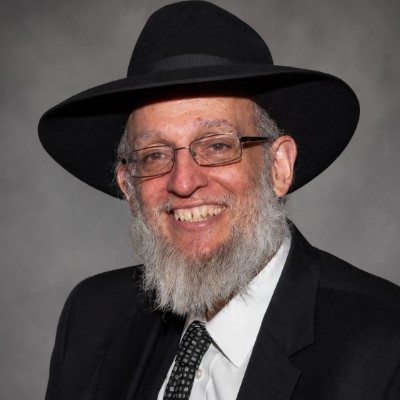
Famed late Mashgiach of Yeshivas Bais Moshe Chaim, His shiurim are a staple of the Yeshiva.
Dedicate a Shiur in shiurim from Rabbi Yeshaya Greenberg ZT"L
L'ilui nishmas a loved one. In honor of a simcha or yahrzeit. As a zechus for a refuah sheleimah. Your dedication helps carry Rabbi Zweig's Torah to learners around the world.
AI search understands topics, Hebrew terms, parsha names, and concepts.
Why does the Torah call Shmita "Shabbos LaHashem" if it's merely agricultural rest, and why is exile the punishment for violating it? The shiur builds on the Maharal's understanding of the ground's spiritual nature to show that in Eretz Yisrael, the land's productivity depends on maintaining its connection to Hashem through Shmita observance. When Jews farm during the seventh year, they spiritually disconnect the land from its divine source, causing both spiritual and physical depletion.
How could Korach accept the fire pan contest if he believed no one should monopolize kehunah? Korach viewed kehunah as an appointed office that anyone could fill rather than an inherent embodiment of sanctity. The aftermath reveals kehunah's evolution—Hashem's declaration of "avodat matanah" transformed it from divine appointment into an eternal gift and inherent identity.
How can Pirkei Avos both command judging everyone favorably and warn against judging until you reach their place? The resolution lies in human psychology: we naturally judge our own questionable actions favorably, starting from the assumption we're good people trying to do right. Reaching "their place" means applying this same charitable standard to others that we instinctively use for ourselves.
Why does the Torah say both "seven complete weeks" and "count fifty days" when seven weeks equals only forty-nine days? The Ramban explains that the fiftieth day represents the sha'ar hachamishim (fiftieth gate of understanding) - the transcendent source from which Torah emanates. We count toward this level but cannot reach it, making the fiftieth day both defining and unattainable.
How can a human serve as a conduit for pure divine action while remaining physically intact? The burning bush resolves Moshe's theological dilemma by demonstrating that just as the bush burned without being consumed, Moshe could channel divine revelation while maintaining his existence. This reframes Hashem's assurance 'ki dai ani lehatzil' as addressing the paradox of divine agency through human instrumentality.
How does one 'make themselves poor' on Rosh Hashanah, as the Gemara in Rosh Hashanah 7b requires? A letter from Rav Wolbe explains that since Rosh Hashanah represents a complete renewal of creation, we must recognize that nothing we have belongs to us by right. Approaching Hashem as truly poor people - asking for everything anew based solely on His chesed - paradoxically creates the zechus and devekus that leads to true spiritual wealth.
Why does Rosh Hashanah come before Yom Kippur when it seems logical to receive forgiveness before judgment? The shiur explains that Rosh Hashanah's acceptance of divine sovereignty creates a new identity that gives us standing to request kapara on Yom Kippur. We're no longer asking God to ignore our sins but to treat past actions as truly past since we've become different people.
How could Pinchas consult with Moshe before acting if kanoi pog'im bo requires immediate zealous action without Beit Din consultation? Rashi's use of 'miyad' reveals that true kanui means acting exactly as God would act, not from personal religious emotion. Even perfect l'shem shamayim intentions cannot justify wrong methods.
Why did the Israelites complain about the manna, calling it "lechem hakelokeil" and objecting that it produced no bodily waste? The shiur connects this to Baal Peor worship, which elevated waste production as a mark of bodily independence from divine connection. The manna represented physical perfection through spiritual dependence on Hashem, but the people wanted to view the physical world as self-contained rather than requiring divine connection.
Why did Klal Yisrael still complain the day after Moshe's definitive test proved his divine authority? They understood that Moshe's explicit divine commands were true, but viewed the test itself as his personal initiative rather than Hashem's command. The deeper lesson: true emunah in leadership means trusting that even a leader's personal initiatives reflect perfect discernment of divine will.
Why did Hashem give tzitzis after the Shabbos desecration, rather than simply requiring tefillin on Shabbos? The Chinuch's analysis reveals that tefillin represents weekday battle between body and soul, while Shabbos represents their synthesis. Tzitzis uniquely contains both elements, providing spiritual protection during the week while embodying the unified gashmius-ruchnius reality of Shabbos.
How can Hashem present alternative explanations for Miriam and Aharon's motivations when criticizing Moshe, as if He doesn't know which applies? The shiur identifies a paradox in the Divine response that challenges how we understand God's omniscience. Even constructive intentions can constitute lashon hara when they involve speaking against someone whose unique status we fail to grasp.
If Bnei Yisrael already accepted the Torah with Na'aseh V'nishma, why did Hashem then coerce them by holding Mount Sinai overhead? The Ran explains that voluntary acceptance would make Torah optional, but Torah must be imposed as an existential necessity. Kofel et hahar established that the world's very existence depends on Torah's presence, not on human choice.
If Shemitah serves agricultural purposes as the Rambam suggests, why does the Torah call it 'Shabbos laHashem,' and how can depleted sixth-year land miraculously yield triple crops? The shiur resolves this by distinguishing Eretz Yisrael's spiritual agriculture from natural farming - the land's productivity depends on Jews recognizing divine ownership, not soil nutrients.
Why do kohanim deserve special honor and material support through matanos kehunah? The Maharal explains that kohanim create shalom bayis between Klal Yisrael and Hashem through their avodah. One who withholds gifts from kohanim fails to appreciate this role and will measure-for-measure need the kohen's intervention to restore the three-way relationship in his own marriage.
Why does the Torah equate slaughtering sacrificial animals outside the Temple to murder? The shiur develops the Ramban's approach that originally all animal life was as protected as human life until Hashem permitted killing animals after the flood. When someone slaughters a korban outside the Temple without heter, it reverts to the original equation between animal and human life.
Why does childbirth create tumah when all other forms of tumah relate to death? The shiur develops the insight that after Adam's sin, birth no longer produces eternal life but mortal life - every baby is born 'destined to die.' The seven days of tumas leida parallel the seven days of aveilus because both mark transitions of mortal existence.
Why would Moshe want to write 'Vayikar' instead of 'Vayikra' when Vayikar describes prophecy through tumah that didn't characterize his own experience? The shiur develops a yesod distinguishing Jewish prophecy achieved through spiritual perfection from non-Jewish prophecy requiring temporary nullification of unworthy recipients. The fundamental question remains unresolved.
Why do the nations specifically mock Parah Adumah when naaseh v'nishma seems far more irrational? The shiur reveals that Parah Adumah exposes the true purpose of all mitzvos: becoming ovdei Hashem through pure submission to His will, not pursuing personal benefits. This 'chok' principle is incomprehensible to those without a relationship with Hashem.
Why do the nations challenge parah adumah rather than naaseh v'nishma, which seems like a stronger criticism? The nations argue that parah adumah contradicts our trust-based approach since here Hashem gives no beneficial reason. But 'because I said so' IS the ultimate reason - creating closeness to Hashem through service is the core benefit of every mitzvah.
Browse by category above to find all 194 shiurim.

