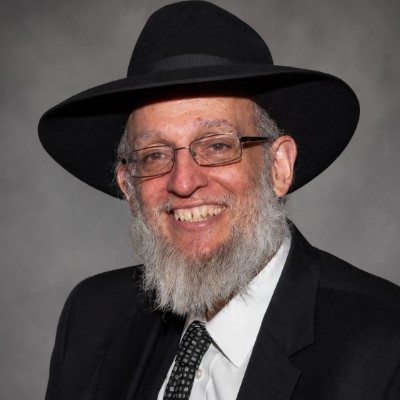
Famed late Mashgiach of Yeshivas Bais Moshe Chaim, His shiurim are a staple of the Yeshiva.
Dedicate a Shiur in shiurim from Rabbi Yeshaya Greenberg ZT"L
L'ilui nishmas a loved one. In honor of a simcha or yahrzeit. As a zechus for a refuah sheleimah. Your dedication helps carry Rabbi Zweig's Torah to learners around the world.
AI search understands topics, Hebrew terms, parsha names, and concepts.
If Bnei Yisrael already accepted the Torah with Na'aseh V'nishma, why did Hashem then coerce them by holding Mount Sinai overhead? The Ran explains that voluntary acceptance would make Torah optional, but Torah must be imposed as an existential necessity. Kofel et hahar established that the world's very existence depends on Torah's presence, not on human choice.
Why does the Gemara in Berachos view Moshe's fear to look at the burning bush as either meritorious or blameworthy? The shiur resolves this through the Kli Yakar's insight that Moshe could have achieved 'admas kodesh' - sanctifying even his physicality through complete bittul. His 'fear' represented choosing human limitations over total self-nullification required to see the divine presence.
Was Moshe's hiding his face at the burning bush a merit or a mistake? The machloket in Berachos reflects whether Moshe could have achieved divine vision through total bittul. Using the Kli Yakar's distinction between Moshe and Yehoshua removing shoes, the shiur develops that "lo yirani ha'adam vachai" means one cannot see God while remaining an "adam" - but transcending to "admas kodesh" makes divine vision possible.
Why does the Gemara in Kiddushin say it's better to sin privately to avoid chilul Hashem, yet also condemn private sinning as showing no regard for God? The shiur resolves this through distinguishing between uncontrollable urges versus deliberate choice. Someone who sins privately despite being able to stop reveals they only care about their own reputation, not Hashem's honor.
Why did Klal Yisrael deserve annihilation in the Purim story? The Gemara in Megillah traces it to bowing before Nevuchadnetzar's idol, but their participation in Achashverosh's feast revealed they hadn't truly repented. Achashverosh's feast celebrated his supposed triumph over God using Temple vessels, making Jewish attendance a validation of earthly over divine authority.
Why does Hashem tell Moshe to step down from leadership during the Golden Calf incident, then immediately offer to make him father of a new nation? The shiur reveals that Hashem's seemingly contradictory words were actually creating an opening for Moshe to pray for Israel's forgiveness. This resolves why Moshe initially had no strength to speak - he thought the sin was too severe to merit any request for mercy until Hashem's phrasing showed divine intervention was actually desired.
How can the Aron Kodesh teach that a talmid chacham must be 'tocho k'varo' when it had wood between its gold layers? The three layers represent body, soul, and actions - true consistency means one's deeds must flow from the neshamah rather than physical motivations. For a talmid chacham, Torah study should make the soul dominant so all external actions reflect inner spiritual reality.
Why does the Torah place fathers first in kibbud but mothers first in mora, contrary to natural tendencies? The shiur argues this reveals that kibbud av va'em is fundamentally not based on natural feelings or gratitude for care received. Instead, it's about recognizing the profound gift of being brought into a world designed for spiritual growth and divine service.
Why does the Torah put father first in kivud av v'eim but mother first in reverence, contrary to natural tendencies? The shiur develops Rabbi Yeshaya Greenberg's yesod that this ordering defines the mitzvos themselves, not just our approach. True parental honor and reverence are spiritual obligations independent of natural feelings.
How could the righteous Hashmoneans who brought Chanukah salvation suffer complete destruction? The shiur develops Rav Tzadok HaKohen's chiddush that the original Hashmoneans established a legitimate parallel kingship based on Torah SheBe'al Peh. Only when Yannai HaMelech massacred the Torah scholars did their rule become an illegitimate usurpation of Yehuda's monarchy.
Why did Yaakov bow to Yosef only after Yosef agreed to bury him in Eretz Yisrael? The Maharal explains that this demonstrates 'talmid be'idanei sagid lei' - we honor people when their divinely appointed time arrives, as evidenced by our need for them. This principle teaches that every person has inherent worth and a destined moment when the world needs them.
Why did Moshe break the Luchos after the Golden Calf? The Gemara's kal v'chomer from Korban Pesach seems flawed since we don't exclude mumrim from all mitzvos. The shiur develops that Korban Pesach and the Luchos both represent covenant-making rather than mere mitzvah performance, so rejection through idolatry justified withholding the marriage contract itself.
Why did Moshe break the tablets after the Golden Calf, using a kal vachomer from the exclusion of apostates from Korban Pesach? The shiur explains that Korban Pesach represents choosing to become 'avdei Hashem' rather than merely freed slaves. Those who worshipped the Golden Calf rejected direct covenant with God, making them unworthy of the tablets which symbolized that divine marriage contract.
Why did Moshe break the Luchos after seeing the Golden Calf? The Gemara learns from a kal vachomer with Korban Pesach, but Tosafos questions this logic. The shiur reveals that both Korban Pesach and milah uniquely represent our covenant of servitude to Hashem, making the Luchos inappropriate for a people who had just rejected that direct relationship through idol worship.
Why did Moshe's kal vachomer comparing the broken Luchos to Korban Pesach make sense, when apostates aren't generally forbidden from all mitzvos? The shiur identifies that Korban Pesach uniquely establishes our national relationship with Hashem, making rejection of it equivalent to severing the basic connection that the Luchos represent.
If Torah acceptance must be forced rather than voluntary (as the Maharal explains regarding 'kafa aleihem har k'gigit' at Sinai), how could Purim represent genuine willing acceptance? The Maharal's yesod that Torah obligation cannot be beratzon because Torah is essential for existence creates a fundamental tension with the Gemara's statement about voluntary acceptance in Achashverosh's time.
How could Purim represent willing Torah acceptance when the Maharal teaches that Torah must be imposed by divine necessity, not human choice? The tension emerges from Tosafos's question about forced acceptance at Sinai despite 'na'aseh v'nishma,' resolved through understanding that Torah exists as an absolute requirement for the world's existence, not an optional commitment.
Why do we need Hashem's mercy before we've even sinned? The shiur traces the Thirteen Attributes through the Moreh Nevuchim's framework, revealing that unintentional sins appear last because they reflect deeper character flaws than intentional transgressions. While deliberate sins stem from intellectual error that can be corrected, carelessness reveals that Torah values haven't penetrated one's essential being.
Why does the Midrash specifically say that adultery forces the Shechinah to depart? The shiur develops the yesod that every marriage has Hashem as a third partner - the letters yud and heh in ish and isha represent His name dwelling between spouses. Adultery therefore requires telling the Shechinah to leave, making it uniquely severe among sins.
Why was coercion needed at Sinai when the Jews had already declared "Na'aseh V'Nishma"? The Maharal explains that Torah acceptance cannot be based on free choice because Torah is the fundamental basis of all existence. At Purim, the Jews finally understood this reality and willingly accepted what necessity demanded.

