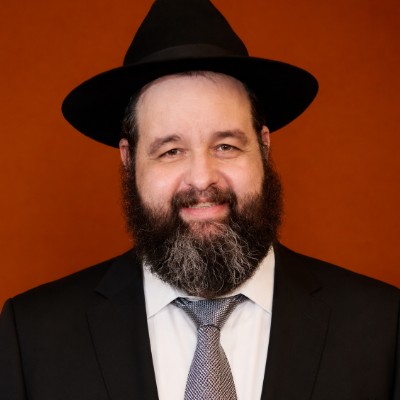
Rosh Yeshiva of Yeshivas Bais Moshe Chaim
Dedicate a Shiur in shiurim from Rabbi Yehuda Zweig
L'ilui nishmas a loved one. In honor of a simcha or yahrzeit. As a zechus for a refuah sheleimah. Your dedication helps carry Rabbi Zweig's Torah to learners around the world.
AI search understands topics, Hebrew terms, parsha names, and concepts.
If Adam HaRishon was already prohibited from eating any meat, why did the Torah need a separate prohibition of ever min hachai? The shiur analyzes how Tosfos and the Rambam understand these as manifestations of one principle: not eating what isn't designated as food. This explains why Noach needed explicit clarification about ever min hachai when meat consumption was permitted.
Why is Tzom Gedaliah different from the other fasts, and why does the Gemara emphasize who killed Gedaliah? Unlike the other fasts that commemorate divine punishment, Gedaliah possessed the unique spiritual power to rebuild the Beis Hamikdash, making his murder by human choice equivalent to destroying it. This teaches that during Aseret Yemei Teshuvah, each individual can access similar transformative power through direct connection with Hashem.
If Adam couldn't eat any meat, why did he need a separate prohibition against Ever Min HaChai? Tosafot distinguishes between killing animals (forbidden to Adam) and eating naturally dead meat (permitted), making Ever Min HaChai necessary for limbs that fall off living animals. The Rambam takes a unified approach: 'Achol Tochel' established one principle of eating only what's designated as food.
Why doesn't kedushah spread from half a woman to make the entire kiddushin valid, as it does with korbanot? The Gemara explains that daas acheres - the woman's consent - blocks the spreading since she only agreed to partial kiddushin. The shiur develops a fundamental chakira: is hispachdus an inherent property of kedushah itself, or a din in hilchos amira about how we interpret partial declarations?
Why does Parshas Bamidbar always precede Shavuos, and why were there two identical countings of exactly 603,550 people? The first counting established who would receive the Torah at Sinai, while the second organized Klal Yisrael into a spiritual army to implement Torah in the world. Shavuos thus celebrates not just receiving Torah but accepting our ongoing individual missions within Hashem's cosmic plan.
Why don't Chazal believe a woman who explains her suspicious conduct with an unknown man? The machlokes between Rabbi Yehoshua and Rabban Gamaliel isn't about ma'alos biyuchsin itself, but about women's ne'emanus in genealogical matters. Both agree that genealogical concerns override normal rules of rov and chezkas kashrus.
Why does zechiyah (acquiring on someone's behalf) work for a katan who cannot appoint a shliach? Tosafos on Kesubos 11a offers two approaches: either shlichus requires formal appointment while zechiyah works through assumed consent, or zechiyah represents the primary form of shlichus needing only beneficial intent. The analysis clarifies when empowerment through shlichus is required versus when zechiyah alone suffices.
Does zechiyah (acquiring for another) work through shlichus (agency), or are they separate concepts? Tosafos offers two approaches to resolve why minors can benefit from zechiyah despite lacking capacity for shlichus. The analysis reveals whether agency requires formal appointment or merely assumed consent.
How could Bathsheba marry Dovid after their affair without violating the prohibition of eishes ish? The Gemara explains she received a conditional get before Uriah went to war, but Rashi and Tosafot offer competing interpretations of these military divorce documents. Their machloket centers on whether the condition was 'if I die' (solving yibum issues) or 'if I don't return' (covering broader scenarios).
Why does mitoch permit making wounds on Yom Tov but not burning incense, when both melachos are sometimes allowed for food preparation? The Gemara distinguishes between activities that are 'shaveh l'chol nefesh' (universally applicable) versus luxuries only practiced by the refined. The shiur suggests mitoch applies only to the four core ochel nefesh melachos in their typical food-related forms.
Why is wounding prohibited on Shabbos - is it about dyeing with blood or taking life? Tosafos critiques Rashi's dyeing approach, arguing that cases like milah and dam besulim involve no blood improvement yet remain prohibited. The melacha must be netilas neshamah - removing the soul-essence - which allows any constructive purpose, not just blood preservation.
How can rabbis nullify kiddushin through 'afkinu rabbanan kiddushin'? The shiur examines the machlokes between Rashi's implicit condition approach versus Tosafos's 'hefker beis din hefker' mechanism. This debate shapes contemporary psak on whether Reform marriages create halachic marriage status.
If duress prevents a husband from returning by the date specified in a conditional get, does the divorce still take effect? The shiur develops Rashi's principle that duress invalidates conditional divorces by making it as if the preventing event never occurred, rather than merely excusing non-performance.
If a husband gives a conditional get saying 'if I don't return within twelve months, this is your divorce,' does unavoidable illness or other oines invalidate the condition? The shiur traces the sugya through Rashi's framework that oines questions whether an act is truly 'his act,' but shows this creates new difficulties about the nature of conditional statements and personal intention in halacha.
Why is one liable for damage when leaving a tied ox with a deaf-mute child, but exempt when leaving fire? The Gemara distinguishes based on derech - children naturally tamper with tied animals but don't typically fan flames. Rashi and Tosafot dispute whether the liability stems from inadequate initial guarding or from choosing an unreliable guardian.
When may one interrupt Torah study for funeral processions? The Gemara sets different attendance requirements based on the deceased's Torah scholarship, but the Rosh argues this is merely permission, not obligation. The shiur resolves this through the principle that ve'ahavta l're'iacha kamocha creates personal obligations that others cannot fulfill on your behalf.
Why must proceeds from selling a synagogue buy an ark, and ark proceeds buy Torah scrolls? Megillah 25b establishes the principle ma'alin bekodesh v'lo moridin - sacred money must purchase items of equal or greater sanctity. The machloket between the Magen Avrohom and Gra reveals whether this reflects the inherent kedushah of the money itself or concerns for kavod hamitzvah.
Can electric lights fulfill the obligations for Havdalah, Shabbos candles, and Chanukah? The shiur analyzes whether incandescent bulbs constitute halachic fire (eish) and proper candles (ner), concluding that while electric lights work for Havdalah and potentially Shabbos candles, Chanukah presents additional problems of grama and the zecher l'mikdash requirement for actual fuel.
Why does the Gemara specifically mention that Ishmael killed Gedaliah when teaching that the death of tzadikim equals the burning of the Beis Hamikdash? The Maharsha and Yeshuos Yaakov explain that this wasn't merely a tzaddik's death, but a murder by a fellow Jew that extinguished the remaining Jewish presence in Eretz Yisrael. When a tzaddik is killed by another Jew, the nation loses both the merit of his righteousness and gains the sin of his murder.
How does depositing a get in a woman's courtyard effect divorce - through yad (extension of hand) or shlichus (agency)? The shiur analyzes the Rashba's distinction between explicit appointment ('tizku li chatzeri') creating immediate shliach l'kabalah versus implicit request requiring proximity. A synthesis emerges that yad and shlichus are the same mechanism but differ in establishment - yad works automatically while shlichus requires explicit appointment.
Browse by category above to find all 49 shiurim.

