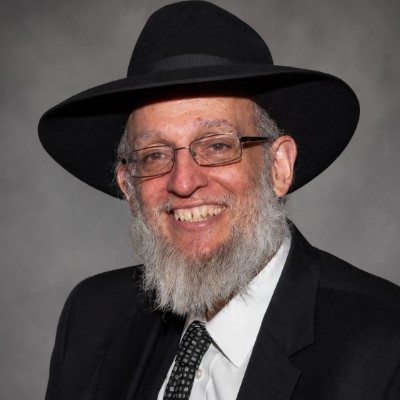
Famed late Mashgiach of Yeshivas Bais Moshe Chaim, His shiurim are a staple of the Yeshiva.
Dedicate a Shiur in shiurim from Rabbi Yeshaya Greenberg ZT"L
L'ilui nishmas a loved one. In honor of a simcha or yahrzeit. As a zechus for a refuah sheleimah. Your dedication helps carry Rabbi Zweig's Torah to learners around the world.
AI search understands topics, Hebrew terms, parsha names, and concepts.
How could Korach accept the fire pan contest if he believed no one should monopolize kehunah? Korach viewed kehunah as an appointed office that anyone could fill rather than an inherent embodiment of sanctity. The aftermath reveals kehunah's evolution—Hashem's declaration of "avodat matanah" transformed it from divine appointment into an eternal gift and inherent identity.
How can Pirkei Avos both command judging everyone favorably and warn against judging until you reach their place? The resolution lies in human psychology: we naturally judge our own questionable actions favorably, starting from the assumption we're good people trying to do right. Reaching "their place" means applying this same charitable standard to others that we instinctively use for ourselves.
Why does the Torah say both "seven complete weeks" and "count fifty days" when seven weeks equals only forty-nine days? The Ramban explains that the fiftieth day represents the sha'ar hachamishim (fiftieth gate of understanding) - the transcendent source from which Torah emanates. We count toward this level but cannot reach it, making the fiftieth day both defining and unattainable.
How can a human serve as a conduit for pure divine action while remaining physically intact? The burning bush resolves Moshe's theological dilemma by demonstrating that just as the bush burned without being consumed, Moshe could channel divine revelation while maintaining his existence. This reframes Hashem's assurance 'ki dai ani lehatzil' as addressing the paradox of divine agency through human instrumentality.
How does one 'make themselves poor' on Rosh Hashanah, as the Gemara in Rosh Hashanah 7b requires? A letter from Rav Wolbe explains that since Rosh Hashanah represents a complete renewal of creation, we must recognize that nothing we have belongs to us by right. Approaching Hashem as truly poor people - asking for everything anew based solely on His chesed - paradoxically creates the zechus and devekus that leads to true spiritual wealth.
Why does Rosh Hashanah come before Yom Kippur when it seems logical to receive forgiveness before judgment? The shiur explains that Rosh Hashanah's acceptance of divine sovereignty creates a new identity that gives us standing to request kapara on Yom Kippur. We're no longer asking God to ignore our sins but to treat past actions as truly past since we've become different people.
How could Pinchas consult with Moshe before acting if kanoi pog'im bo requires immediate zealous action without Beit Din consultation? Rashi's use of 'miyad' reveals that true kanui means acting exactly as God would act, not from personal religious emotion. Even perfect l'shem shamayim intentions cannot justify wrong methods.
Why did the Israelites complain about the manna, calling it "lechem hakelokeil" and objecting that it produced no bodily waste? The shiur connects this to Baal Peor worship, which elevated waste production as a mark of bodily independence from divine connection. The manna represented physical perfection through spiritual dependence on Hashem, but the people wanted to view the physical world as self-contained rather than requiring divine connection.
Why did Klal Yisrael still complain the day after Moshe's definitive test proved his divine authority? They understood that Moshe's explicit divine commands were true, but viewed the test itself as his personal initiative rather than Hashem's command. The deeper lesson: true emunah in leadership means trusting that even a leader's personal initiatives reflect perfect discernment of divine will.
Why did Hashem give tzitzis after the Shabbos desecration, rather than simply requiring tefillin on Shabbos? The Chinuch's analysis reveals that tefillin represents weekday battle between body and soul, while Shabbos represents their synthesis. Tzitzis uniquely contains both elements, providing spiritual protection during the week while embodying the unified gashmius-ruchnius reality of Shabbos.
How can Hashem present alternative explanations for Miriam and Aharon's motivations when criticizing Moshe, as if He doesn't know which applies? The shiur identifies a paradox in the Divine response that challenges how we understand God's omniscience. Even constructive intentions can constitute lashon hara when they involve speaking against someone whose unique status we fail to grasp.
If Bnei Yisrael already accepted the Torah with Na'aseh V'nishma, why did Hashem then coerce them by holding Mount Sinai overhead? The Ran explains that voluntary acceptance would make Torah optional, but Torah must be imposed as an existential necessity. Kofel et hahar established that the world's very existence depends on Torah's presence, not on human choice.
If Shemitah serves agricultural purposes as the Rambam suggests, why does the Torah call it 'Shabbos laHashem,' and how can depleted sixth-year land miraculously yield triple crops? The shiur resolves this by distinguishing Eretz Yisrael's spiritual agriculture from natural farming - the land's productivity depends on Jews recognizing divine ownership, not soil nutrients.
Why do kohanim deserve special honor and material support through matanos kehunah? The Maharal explains that kohanim create shalom bayis between Klal Yisrael and Hashem through their avodah. One who withholds gifts from kohanim fails to appreciate this role and will measure-for-measure need the kohen's intervention to restore the three-way relationship in his own marriage.
Why does the Torah equate slaughtering sacrificial animals outside the Temple to murder? The shiur develops the Ramban's approach that originally all animal life was as protected as human life until Hashem permitted killing animals after the flood. When someone slaughters a korban outside the Temple without heter, it reverts to the original equation between animal and human life.
Why does childbirth create tumah when all other forms of tumah relate to death? The shiur develops the insight that after Adam's sin, birth no longer produces eternal life but mortal life - every baby is born 'destined to die.' The seven days of tumas leida parallel the seven days of aveilus because both mark transitions of mortal existence.
Why would Moshe want to write 'Vayikar' instead of 'Vayikra' when Vayikar describes prophecy through tumah that didn't characterize his own experience? The shiur develops a yesod distinguishing Jewish prophecy achieved through spiritual perfection from non-Jewish prophecy requiring temporary nullification of unworthy recipients. The fundamental question remains unresolved.
Why do the nations specifically mock Parah Adumah when naaseh v'nishma seems far more irrational? The shiur reveals that Parah Adumah exposes the true purpose of all mitzvos: becoming ovdei Hashem through pure submission to His will, not pursuing personal benefits. This 'chok' principle is incomprehensible to those without a relationship with Hashem.
Why do the nations challenge parah adumah rather than naaseh v'nishma, which seems like a stronger criticism? The nations argue that parah adumah contradicts our trust-based approach since here Hashem gives no beneficial reason. But 'because I said so' IS the ultimate reason - creating closeness to Hashem through service is the core benefit of every mitzvah.
Why does Amalek attack precisely when the Jewish people are at their spiritual height? The shiur develops the principle that Amalek's very existence depends on maintaining separation between the physical and divine realms. Haman's declaration that all his success meant nothing while Mordechai lived reveals that Amalek cannot coexist with even the smallest divine presence in the world.
If the Jewish people willingly said naaseh v'nishma, why did Hashem need to coerce them by holding Mount Sinai over them? The Maharal explains that Torah is hechrechi (axiomatic) - existence itself requires it, so acceptance couldn't be left to choice. At Purim, experiencing Divine concealment taught us that the real choice isn't Torah versus no Torah, but existence versus non-existence.
If the Jews already said naaseh v'nishma willingly, why did Hashem still coerce them with kafa aleihem har k'gigis? The Maharal's yesod is that Torah cannot be accepted voluntarily because it's axiomatically necessary for existence - voluntary choice would imply the world could exist without Torah. At Purim, through hester panim, they finally understood the choice was between existence and non-existence, making genuine voluntary acceptance possible.
If the Jews willingly accepted the Torah with Naaseh V'Nishma, why did Hashem still need to coerce them? The Maharal explains that Torah is hechrechi (axiomatic) - the world must exist with Torah, not as a choice. At Purim, through hester panim, the Jews discovered the choice wasn't between existing with or without Torah, but between existence and non-existence itself.
Why did Bnei Yisrael's ingratitude at Refidim lead directly to Amalek's attack? True hakaras hatov isn't about obligation but about recognizing that someone cares about us, which enables relationship. When we acknowledge Hashem's constant kindness, we realize we are cherished and can experience genuine joy and connection rather than taking His care for granted.
Why does recognizing someone's kindness often feel burdensome rather than uplifting? The shiur reframes hakaras hatov not as a debt we owe our benefactor, but as recognition that someone cares about us, which opens the door to genuine relationship. A powerful story from a shiva house demonstrates how true gratitude creates emotional benefit for both giver and receiver.
Why does the Torah describe Pinchas's lineage through 'Putiel' - referencing Yisro who 'fattened calves for avodah zarah' - when the tribes used this same term to mock him? Building on the Rambam's understanding of Avrohom's spiritual journey, Yisro's idol worship represented sincere truth-seeking, systematically investigating every belief system before rejecting it. His thoroughness in 'fattening calves' showed complete commitment to testing each path, making this lineage a source of praise rather than shame.
Why does the Torah mention that Pinchas descended from Putiel, referencing Yisro who "fattened calves for idol worship"? The shiur explains that Yisro was conducting a genuine, methodical search for truth by thoroughly examining every belief system before rejecting it. Pinchas inherited this same intensity and dedication to absolute truth, which enabled his decisive action to save the Jewish people.
Why does the Gemara in Berachos view Moshe's fear to look at the burning bush as either meritorious or blameworthy? The shiur resolves this through the Kli Yakar's insight that Moshe could have achieved 'admas kodesh' - sanctifying even his physicality through complete bittul. His 'fear' represented choosing human limitations over total self-nullification required to see the divine presence.
Was Moshe's hiding his face at the burning bush a merit or a mistake? The machloket in Berachos reflects whether Moshe could have achieved divine vision through total bittul. Using the Kli Yakar's distinction between Moshe and Yehoshua removing shoes, the shiur develops that "lo yirani ha'adam vachai" means one cannot see God while remaining an "adam" - but transcending to "admas kodesh" makes divine vision possible.
Why did Yosef give dibas ra about his brothers, and why did Reuven's rescue plan fail? The Maharal reveals that Yosef's error was conflating basic halachic requirements with his own stringencies—seeing his brothers' permissible actions as transgressions. Meanwhile, Reuven chose an indirect rescue approach due to uncertainty about his own motives, creating a tragic irony where Yosef's inability to distinguish din from lifnim mishuras hadin prevented his rescue by someone who made exactly that distinction properly.
Why does Chanukah last eight nights when the Menorah has only seven candles? A Midrash on gematria reveals that the Heichal contains a 'hidden Yud' - representing how seven (nature) always contains eight (the supernatural) within it. Chanukah's miracle shows that Greek philosophy erred by seeing only the physical realm, missing the divine essence concealed within the natural world.
Why does Yaakov tell Esav that their father's berachos weren't fulfilled in him? The shiur develops a yesod that physical berachos only have value when connected to spirituality. Yaakov explains to Esav that since Esav only cares about immediate material dominion, he already has what he wants - the current physical world.
Why does the Torah repeat Rivka's lineage, and why was Yitzchok's prayer for children answered instead of hers? The shiur explains that Rivka blamed herself for her child's spiritual struggles, thinking her background caused the evil she sensed. The Torah's repetition clarifies she was blameless - the spiritual dynamics were part of Hashem's multi-generational purification process through the avos.
Why was Sarah criticized for demanding that Hashem judge between her and Avrohom regarding his prayers for children? The shiur reveals that the Avos didn't pray for their wives to have children but only for themselves to build Klal Yisrael. Personal desires, even legitimate ones, couldn't drive prayers for founding the Jewish nation until wives demonstrated complete selflessness by offering their maidservants.
Why does the Torah present only Avrohom as the Akedah's hero when Yitzchok was thirty-seven and willingly participated? The shiur explains that bris milah transforms a person into a living korban belonging entirely to Hashem. Yitzchok's willingness to be sacrificed expressed his transformed nature from circumcision, while Avrohom's test was achieving through nisayon what was already embedded in Yitzchok.
Why does the Gemara in Kiddushin say it's better to sin privately to avoid chilul Hashem, yet also condemn private sinning as showing no regard for God? The shiur resolves this through distinguishing between uncontrollable urges versus deliberate choice. Someone who sins privately despite being able to stop reveals they only care about their own reputation, not Hashem's honor.
Why does Rosh Hashanah come before Yom Kippur rather than after we've cleansed ourselves through teshuvah? Rosh Hashanah judges our present identity through accepting Hashem's kingship, creating a new relationship that transforms who we are. This new identity provides the basis for Yom Kippur's forgiveness — we're no longer the same person who committed those sins.
How can Eicha 1:21 blame Hashem for making exile harsh by forbidding intermarriage with our oppressors? The shiur uses Rashi on Shir Hashirim to show that love means exclusive dependency, not mutual service. Hashem's demand for exclusivity creates His obligation to sustain us even in deserved exile.
How could Pinchas act as a zealot yet receive divine approval while Pninah, who tormented Chanah purely l'shem Shamayim to encourage her prayers, was punished? Rashi's insight that Pinchas acted with God's anger, not his own, reveals the key distinction. Good intentions aren't enough—one must align with divine will rather than personal understanding, even when motivated by righteousness.
Why did Balak try to defeat Israel using speech/blessing (Bil'am) rather than opposing power like Edom did with the sword? The shiur develops that each nation must use their own divinely appointed strength - usurping another's spiritual inheritance is inherently flawed. This explains the contradictory divine interactions with Bil'am and why he was ultimately killed by sword.
Why did Moshe's hitting the rock instead of speaking to it constitute such a grave sin when both would produce equally miraculous results? The lesson reveals that creation naturally responds to Hashem's will automatically, while humans received free will not as license for independence but to earn reward by consciously choosing this same response. We should use our bechira to actively align with Hashem rather than rationalize disobedience.
Why did Hashem tell Moshe 'shelach lecha' - leaving the decision to send spies up to him - instead of giving clear guidance? The shiur argues that Moshe faced an impossible dilemma: refusing might increase the people's suspicions, while agreeing carried the risk that materialized. Hashem's ambiguous response reflected that the people's lack of emunah had already created their own trap - they would likely fail regardless of which path Moshe chose.
Why does withholding priestly gifts lead to the punishment of one's wife becoming a sotah? The middah k'neged middah reflects that one who doesn't appreciate the kohen's role in creating peace between Israel and Hashem must learn this lesson personally through his marriage. Every Jewish marriage is a microcosm of the covenant relationship between Klal Yisrael and Hashem.
Why were the Levites counted separately from the rest of Bnei Yisrael? Rashi's explanation connecting this to the Golden Calf and the spies seems problematic since the counting preceded the spies' mission. The shiur develops that both sins represented rejection of Hashem's leadership, and the Levites' loyalty during the Golden Calf earned them special status as Hashem's legion, exempt from the collective punishment.
Why does the Torah use the language of "walking" in My statutes rather than learning or observing them? The shiur develops Rabbi Yeshaya Greenberg's insight that Torah must recreate our essence, not just fill our minds. A true ben Torah is literally "born" from Torah study with proper toil, achieving internal transformation that makes one's character consistent with Torah values.
Why do the nations challenge Parah Adumah specifically, when they could question our entire Na'aseh V'Nishma commitment? Chukim reveal that the ultimate benefit of all mitzvos isn't their specific functions but the hishtabdus (spiritual servitude) to Hashem that creates kedushah. This foundation of voluntary subjugation leading to elevation is completely inaccessible to the nations.
Why did Klal Yisrael deserve annihilation in the Purim story? The Gemara in Megillah traces it to bowing before Nevuchadnetzar's idol, but their participation in Achashverosh's feast revealed they hadn't truly repented. Achashverosh's feast celebrated his supposed triumph over God using Temple vessels, making Jewish attendance a validation of earthly over divine authority.
Why does the Gemara emphasize Achashverosh removing his ring rather than giving it to Haman? The Maharal's approach shows that removing the ring expelled Jews from Achashverosh's sovereignty, creating a 'hester within hester' that awakened deeper teshuvah. The shekalim for korbanos had already transferred Jewish allegiance from earthly king to Hashem, meaning Achashverosh couldn't 'sell' what he no longer owned.
Why did our shekalim need to precede Haman's shekalim for Purim salvation to occur? The Maharal's insight reveals that shekalim for Temple offerings represented Jews giving themselves to Hashem's sovereignty. When Haman offered money to destroy the Jews, Achashverosh couldn't complete the sale because they no longer belonged to him.
Why does Hashem tell Moshe to step down from leadership during the Golden Calf incident, then immediately offer to make him father of a new nation? The shiur reveals that Hashem's seemingly contradictory words were actually creating an opening for Moshe to pray for Israel's forgiveness. This resolves why Moshe initially had no strength to speak - he thought the sin was too severe to merit any request for mercy until Hashem's phrasing showed divine intervention was actually desired.
Why does Hashem first tell Moshe to descend from his greatness, then immediately offer to make him father of a new nation? The shiur traces two distinct phases: Moshe initially couldn't even pray due to the sin's severity, but physically grabbed onto Hashem in speechless love. Only this demonstration of unconditional devotion elevated him from functional leader to someone worthy of founding a new people.
How can the Aron Kodesh teach that a talmid chacham must be 'tocho k'varo' when it had wood between its gold layers? The three layers represent body, soul, and actions - true consistency means one's deeds must flow from the neshamah rather than physical motivations. For a talmid chacham, Torah study should make the soul dominant so all external actions reflect inner spiritual reality.
Why was Haman happy his lottery fell on Adar, knowing Moshe died that month? The shiur explains Amalek's paradox: claiming randomness while conducting lotteries that suggest divine timing. Haman's strategic use of hester panim - orchestrating events to appear godless - became the very mechanism for Jewish teshuvah and salvation through v'nahafchu.
Why does the Torah place fathers first in kibbud but mothers first in mora, contrary to natural tendencies? The shiur argues this reveals that kibbud av va'em is fundamentally not based on natural feelings or gratitude for care received. Instead, it's about recognizing the profound gift of being brought into a world designed for spiritual growth and divine service.
Why does the Torah put father first in kivud av v'eim but mother first in reverence, contrary to natural tendencies? The shiur develops Rabbi Yeshaya Greenberg's yesod that this ordering defines the mitzvos themselves, not just our approach. True parental honor and reverence are spiritual obligations independent of natural feelings.
Why did Klal Yisrael first cry out to Hashem in genuine fear, then immediately turn to sarcastic complaints against Moshe at the same moment of mortal danger? The analysis reveals that sarcasm functions by suggesting even nonsensical alternatives make more sense than the target's actions. This shows Klal Yisrael viewed leaving Egypt as so irrational that a shortage of Egyptian graves would be more logical than Moshe's reasoning.
Why did Bnei Yisrael cry out to Hashem in prayer, then immediately turn to mock Moshe with bitter sarcasm about leaving Egypt? The shiur analyzes the psychology of crisis behavior, showing that people often deflect existential fear through blame and sarcasm while simultaneously reaching for genuine prayer.
If Hashem hardened Paroh's heart, why did Moshe keep warning him when he couldn't comply anyway? The answer lies in midah k'neged midah: just as Paroh enslaved the Jews through gradual deception that made them feel responsible for their own enslavement, Paroh needed to feel personally responsible for Egypt's destruction. The warnings ensured Paroh would experience the psychological torment of preventable tragedy rather than feeling like a mere victim.
Why does the Torah use 'nikra' (impure prophetic language) when describing divine revelation to the Jewish people, the same terminology used for Bilam? The shiur distinguishes between two types of prophecy: earned prophecy that filters through a person's spiritual level, versus granted prophecy where the recipient must temporarily cease conscious existence to avoid corrupting the divine message. This explains why Bilam required 'lashon tumah' and why the Jews in Egypt, before circumcision, temporarily needed similar terminology.
Why does the Torah use 'nikra' (the language of tumah) when Moshe tells Pharaoh that Hashem appeared to the Israelites, rather than 'vayikra' used for pure prophetic revelations? The shiur develops the insight that since the Israelites were still uncircumcised in Egypt, they required the same 'fallen' state for receiving divine communication as Bilam and pre-circumcision Avrohom.
Why did Yaakov curse both Shimon and Levi together if their motivations in Shechem differed? The shiur reveals that while both acted excessively, Levi was driven by misguided sensitivity to kedushas Yisrael, while Shimon acted from family honor. These distinct motivations explain why their descendants erred in opposite directions—Zimri denying Jewish holiness entirely, Korach inflating it beyond bounds.
Why did Yaakov curse both Shimon and Levi identically when their descendants failed in opposite ways regarding kedushas Yisrael? The shiur reveals that despite identical actions at Shechem, their motivations differed fundamentally - Levi acted from excessive spiritual sensitivity while Shimon prioritized family honor over kedushah. These contrasting inner drives produced Zimri (who denied Jewish distinctiveness) and Korach (who falsely universalized holiness).
How could the righteous Hashmoneans who brought Chanukah salvation suffer complete destruction? The shiur develops Rav Tzadok HaKohen's chiddush that the original Hashmoneans established a legitimate parallel kingship based on Torah SheBe'al Peh. Only when Yannai HaMelech massacred the Torah scholars did their rule become an illegitimate usurpation of Yehuda's monarchy.
How could the Greeks defile all the Temple oil except one jar sealed by the High Priest? The Maharal's gematria shows that while Greece (66) exceeded the Heichal (65), the hidden power of the Kohen (75) protected what bore the seal of holiness. Chanukah's eight-day miracle reveals the divine spark embedded within the seven-day natural world.
Why does Yehuda argue against killing Yosef when the brothers had already agreed to Reuven's plan to let him die in a pit? Reuven believed one could avoid moral responsibility through indirect action, while Yehuda rejected any distinction between active killing and passive letting-die. Yaakov's final blessing crediting Yehuda with saving Yosef shows that true leadership requires accepting full responsibility rather than avoiding consequences through technical distinctions.
Why does Rashi criticize Esav for saying 'I have much' while praising Yaakov for saying 'I have everything I need'? The distinction reveals two fundamentally different attitudes toward wealth. Esav's perspective reflects gaavah - viewing surplus as purposeless excess beyond his self-determined needs, while Yaakov recognizes that Hashem gives exactly what each person requires for their mission.
How could Leah praise Reuven for saving Yosef when Reuven had sinned and lost his birthright to Yosef as punishment? The shiur reveals a fundamental machloket between Yaakov and Leah about the wives' hierarchy: while Yaakov saw Reuven's punishment as just (since Rochel enabled Reuven's firstborn status), Leah believed she was rightfully the primary wife and Yosef's birthright was therefore undeserved.
How could Avrohom make Hashem 'Elokei HaAretz' while Shema declares He's only 'Elokeinu' now, not yet God of all nations? The Maharal distinguishes between general recognition of God's role in creation versus complete recognition of His absolute unity. Our declaration of 'Hashem echad' affirms the deeper truth that His unity is already complete reality, even when the world doesn't yet see it.
Why would Hashem promise Avrohom the nation of Edom at the time of Bris Milah when Esav's descendants don't observe this mitzvah? The shiur develops that Esav was originally meant to develop the physical world under Yaakov's spiritual guidance. Though Esav chose corruption, Edom still serves the divine plan by building world infrastructure that will ultimately pass to the righteous.
Why does Rashi interpret 'dodi li va'ani lo' as mutual asking rather than mutual service? The shiur develops that true love means specifically wanting your beloved to fulfill your needs, not just getting needs met. This reframes Elul from fear-based merit accumulation to relationship building—Hashem asks us for mitzvos because He wants connection, and we turn to Him because we want His loving care.
Why does the Torah use 'vayikar' for God's communication with Bilaam, a term Rashi associates with tumah, when describing Divine appearance? The answer lies in how Bilaam achieved prophecy: unlike Jewish prophets who reached clarity through spiritual elevation, Bilaam required temporary nullification of his evil inclination—a state resembling spiritual death that created the tumah, while paradoxically enabling the highest prophetic clarity.
What was Moshe's sin at Mei Merivah that prevented him from entering Eretz Yisrael? The Maharal identifies anger as the core problem - complete emunah should produce only joy when witnessing miracles. By striking rather than speaking to the rock, Klal Yisrael lost a crucial kal v'chomer about using free will to consciously align with Hashem's will.
Why did the people believe the spies' claim that the inhabitants were stronger than Hashem after witnessing miracles in Egypt? The people weren't doubting God's power but rejecting complete dependence on Him in Eretz Yisrael, preferring Egyptian slavery to rain-dependent agriculture that required maintaining their relationship with Hashem. This analysis reveals how personal bias leads people to rationalize harming even their families while claiming to help them.
Why did Miriam criticize Moshe's separation from his wife when she and Aharon were also prophets but remained married? The Maharal's analysis reveals that Moshe's essence is uniquely determined by his level of divine revelation - he becomes a perfect reflection of whatever divine flow he receives. This explains why his prophecy alone required complete separation and why questioning his practices misunderstood his fundamentally different prophetic nature.
Why does the Torah call Aharon's sons Moshe's offspring when he taught them Torah, but not give this title to others who learned from Moshe? The shiur develops that true Torah teaching means transmitting the Sinai experience itself - the direct divine connection, not just information. When a teacher successfully conveys 'mipi hagevarah,' the student experiences spiritual rebirth through direct attachment to Hashem.
If Shmittah prevents agricultural depletion, why does the sixth year produce the most crops after five consecutive years of farming? The shiur develops Rabbi Yeshaya Greenberg's yesod that Eretz Yisrael operates by spiritual rather than natural laws. The 'depletion' Shmittah prevents is spiritual - when Jews view themselves as owners rather than divine caretakers, severing the land's connection to Hashem.
What does it mean for the omnipresent Hashem to 'set His face against' someone and focus exclusively on them? The shiur develops a yesod that divine 'panai' refers to the quality of relationship, not capability. Hashem's ultimate punishment isn't abandonment but rather turning His direct personal attention into an instrument of complete severance.
How can matzah be called 'lechem ani' (poor man's bread) yet symbolize freedom? The Maharal explains that aniis represents freedom from external attachments and possessions that enslave us. True geulah means having only what's necessary without being burdened by excess or constantly seeking more.
Why does the Mishna teach serving God 'not for reward' when the Ramchal says God created the world specifically to bestow reward on us? The shiur uses the Nefesh HaChaim's distinction: serving for reward becomes proper when motivated by fulfilling God's desire to give, rather than our desire to receive. This transforms reward-seeking from selfishness into genuine avodas Hashem.
Should we serve Hashem for reward or without expectation of reward? The shiur explores how this seeming contradiction resolves when we understand that mitzvos must have intrinsic value beyond their rewards. True avoda creates genuine deveikus with Hashem, making subsequent reward deserved rather than unearned charity.
Why do nations mock both na'aseh v'nishma and Parah Adumah as examples of blind Jewish obedience? The shiur distinguishes between trust-based acceptance of unknown mitzvos versus servitude-based performance of incomprehensible decrees. Both challenges are answered by the same yesod: the primary benefit isn't understanding each mitzvah but the merit of being Hashem's servants.
Why do the nations challenge Jews specifically about Parah Adumah rather than Na'aseh V'Nishma, which seems like a much greater puzzle? The nations understand that Jews accept mitzvos because they trust God gives them what's beneficial, but Parah Adumah reveals a deeper truth: we serve God not for specific rewards but because being His servants is itself the ultimate good.
Why would Amalek attack Israel knowing they'd lose? The shiur traces Amalek's origin to chet HaEtz HaDaas through the connection between Haman and the word 'hamin' in God's question to Adam. Unlike other nations, Amalek exists only through separation from God and therefore has nothing to lose — Israel's spiritual success would eliminate their very existence.
Why does the Gemara require drinking on Purim until we cannot distinguish between cursing Haman and blessing Mordechai? The Maharal explains that Purim celebrates physical survival, so we demonstrate through intoxication that even without intellectual control, our physical selves remain connected to Hashem through internalized Torah. This counters Amalek's claim that physical existence is separate from the divine.
Why does the Torah command drinking on Purim, seemingly compromising our spiritual faculties? The shiur develops the Maharal's insight that Amalek sought to prove physical existence can be severed from spiritual reality. By serving Hashem through pure physicality while intellect is subdued, we demonstrate that a ben Torah's entire being remains Divinely connected.
Why did our shekalim counteract Haman's shekalim when Achashverosh refused Haman's money anyway? Building on the Maharal's approach, Haman's payment represented purchasing us away from Achashverosh's kingdom before destroying us. Our shekalim for korbanos declare we belong to Hashem alone, making us impossible for any earthly power to purchase or control.
How do our shekalim counteract Haman's attempted purchase of the Jewish people, especially when Achashverosh refused his payment? The Maharal's insight reveals that kings naturally protect their subjects since destroying them diminishes royal power, but Haman's purchase would transfer us from Achashverosh's protection. Our shekalim for korbanot acknowledge divine ownership, making us God's subjects whom no earthly king can sell.
Why does Rashi describe Egyptian unity as "with one heart like one person" but Israeli unity as "like one person with one heart"? The Avnei Nezer's reading reveals that Egypt achieved temporary unity through shared purpose, while Israel possesses essential unity that enables unified hearts. This reflects divine oneness itself - Israel's recognition that we exist only through attachment to Hashem creates true achdus among us.
Why does the Torah use singular language for both Egyptian pursuit and Jewish encampment, yet Rashi reverses the phrase order? The Avnei Nezer reveals that Egypt achieved temporary unity around a common goal, while Israel possesses intrinsic unity reflecting divine oneness. True Jewish achdus flows from recognizing our existence derives entirely from connection to Hashem, not from independent identities seeking common ground.
What justified Moshe's killing of the Egyptian who beat a Hebrew slave? The Mizrachi holds that prophecy merely permitted Moshe to kill, so he needed confirmation that no righteous descendants would emerge. The Maharal argues that prophetic knowledge of the Egyptian's capital sin created an actual obligation to execute him unless specifically told otherwise.
Why did Moshe need to check prophetically if the Egyptian would have righteous descendants before killing him? The Mizrachi and Maharal dispute whether prophetic knowledge of crimes creates a binding obligation to execute or merely permits it. This fundamental disagreement determines how uncertainties about future generations affect the decision to proceed with divinely-informed justice.
Why did Yaakov bow to Yosef only after Yosef agreed to bury him in Eretz Yisrael? The Maharal explains that this demonstrates 'talmid be'idanei sagid lei' - we honor people when their divinely appointed time arrives, as evidenced by our need for them. This principle teaches that every person has inherent worth and a destined moment when the world needs them.
Why did Yaakov bow to Yosef after securing his burial promise, with the Gemara applying 'shual be'idno sagad lo' - even a fox in his time is bowed down to? The shiur develops the Morral's reading that connects this to 'ein lecha adam she'ein lo sha'ah' from Avos - every person has their moment when the world needs them specifically. This teaches us to honor others not as flattery but as recognition of their inherent divine purpose.
Why didn't Yosef tell Yaakov he was alive during his years in Egypt? The Ramban holds that Yosef's dreams weren't merely predictions but divine directives he had to actively fulfill. His mission was to develop Yehuda's leadership through trials, and revealing himself prematurely would have thwarted this divine plan.
Why did Yaakov credit Yehuda for saving Yosef when Reuven was the one who prevented the murder by suggesting the pit? The key distinction is responsibility versus evasion. Reuven's approach taught the brothers they could cause Yosef's death without being murderers, while Yehuda insisted they take full responsibility and abandon the plan entirely.
How could Rashi say the berachos were physical ('kemashma'o') yet later claim Yaakov told Esau they were spiritual? The Maharal resolves this by explaining the berachos transform physical reality into spiritual connection - giving Yaakov dominion over Esau's material world by perfecting it through ruchnius.
How could Leah prophetically suggest that Reuven had a right to complain about losing his birthright if he sinned with Bilhah? Rashi reveals that Reuven acted to defend Leah's honor when Yaakov elevated Bilhah over her after Rochel's death. Leah agreed with Reuven's complaint while acknowledging his sinful method, reflecting a fundamental dispute about who should be the primary wife.
Why does the Torah repeat Rivka's family lineage when praising her righteousness despite evil surroundings? The shiur develops that Rivka didn't just resist bad influences - she extracted the positive potential from her family's negative traits, like their cunning, and redirected these powers toward good. This explains how a tzaddik can actually benefit from encountering evil when properly channeled.
Why did Sarah die upon hearing about the Akeidah, when it was such a tremendous zechus? The shiur develops the idea that Sarah's earlier criticism of Avrohom revealed a personal investment in motherhood, unlike Avrohom's completely selfless devotion. Her death at this moment was middah keneged middah - the Akeidah highlighted the very personal attachment that made her unable to bear Yitzchok's near-sacrifice.
Why didn't Avrohom question God's command to sacrifice Yitzchok, but only protested when told to stop? Avrohom understood the initial command as bringing a meaningful korban for divine purpose, making his personal promise secondary. When stopped, he realized retrospectively it was 'just' a test, transforming meaningful sacrifice into seemingly senseless destruction - prompting his famous argument with God.
Why did Avrohom only recognize Sarah's beauty when he saw her reflection in water approaching Egypt? The shiur develops the yesod of tocho k'baro - that Avrohom always saw Sarah's physical beauty as a direct reflection of her neshamah's beauty. The water reflection showed him her physical appearance alone, helping him understand how beautiful she would appear even to Egyptians who couldn't perceive her spiritual dimension.
Why does the Torah emphasize serving Hashem with simcha as the key to avoiding curses, and how does this prepare us for Rosh Hashanah? The judgment of Rosh Hashanah is actually a chesed that establishes our eternal identity and creates a new relationship with Hashem through accepting His kingship. Serving with simcha shows we recognize mitzvos as gifts from a loving Father-King rather than burdens from a distant ruler.
Why did Hashem add divine letters to family names during the census in Pinchas, forty years after the Exodus? Zimri's sin represented an ideological attack claiming no fundamental difference exists between Jews and non-Jews physically. This divine testimony affirmed authentic Jewish lineage precisely when needed - after Zimri's challenge to kedushas Yisrael threatened the entire purpose of creation.
How could Korach, a great and wise person, convince himself to rebel against Moshe's clear divine mandate? The power of negiyus (personal bias) can make even great people completely convinced of falsehood when driven by personal interests. Korach's rebellion stemmed from Levi's original positive trait - heightened sensitivity to kedushah - but when taken to the extreme of claiming all Jews are equally holy, this sensitivity became destructive.
Why do the nations challenge us on Para Aduma rather than Naaseh v'Nishma, when accepting Torah without knowing its contents seems more problematic? Naaseh v'Nishma reflects trust in Hashem's love, while Para Aduma demands pure nullification without reason. The deeper teaching is that complete bittul to Hashem as the source of all existence is actually self-fulfillment, not self-destruction.
Why doesn't the Torah explicitly mention Olam Haba if it's our ultimate goal? The Maharal's answer: Torah's purpose is to perfect this world, not the already-perfect World to Come. This means our mitzvos must create real meaning and connection now, not just earn future reward like meaningless busywork.
Why does the Torah add 'fear your God' specifically to the prohibition of onaas devarim? The shiur explains this refers to sins 'masul laleiv' - matters of the heart where only the speaker knows their true intentions. People often rationalize hurtful words as mitzvos, making verbal oppression particularly dangerous in religious contexts where tochacha can become a pretext for cruelty.
Why did Rabbi Akiva's students die for lacking mutual respect despite their teacher's emphasis on loving others? The closeness created by intense Torah learning paradoxically makes proper respect harder, since Torah study builds deep personal entitlement and makes attacks on one's sevara feel like attacks on existence itself. This dynamic explains why chavrusa partners become 'enemies' during arguments and why intimacy often undermines kavod.
Why does the Torah switch the order of parents in different contexts - 'honor father and mother' versus 'revere mother and father'? The shiur develops that this switching teaches us to base kavod and yirah on recognizing parents as shutfin b'adam (partners in creation), not on natural feelings. We must cultivate emotions based on what's objectively right, rather than determining what's right based on how we naturally feel.
Why did Moshe change Hashem's precise timing for Makas Bechoros from 'at midnight' to 'around midnight,' yet wasn't concerned when more Egyptians died than expected? The shiur reveals that chatzos represents a metaphysical 'non-time' beyond temporal measurement, necessary because this plague constituted the actual creation of Klal Yisrael. Precision about timing mattered because it distinguished divine transcendence from human action, while the number of deaths was merely a question of scope.
Why did Moshe break the Luchos after the Golden Calf? The Gemara's kal v'chomer from Korban Pesach seems flawed since we don't exclude mumrim from all mitzvos. The shiur develops that Korban Pesach and the Luchos both represent covenant-making rather than mere mitzvah performance, so rejection through idolatry justified withholding the marriage contract itself.
Why did Moshe break the tablets after the Golden Calf, using a kal vachomer from the exclusion of apostates from Korban Pesach? The shiur explains that Korban Pesach represents choosing to become 'avdei Hashem' rather than merely freed slaves. Those who worshipped the Golden Calf rejected direct covenant with God, making them unworthy of the tablets which symbolized that divine marriage contract.
Why did Moshe break the Luchos after seeing the Golden Calf? The Gemara learns from a kal vachomer with Korban Pesach, but Tosafos questions this logic. The shiur reveals that both Korban Pesach and milah uniquely represent our covenant of servitude to Hashem, making the Luchos inappropriate for a people who had just rejected that direct relationship through idol worship.
Why did Moshe's kal vachomer comparing the broken Luchos to Korban Pesach make sense, when apostates aren't generally forbidden from all mitzvos? The shiur identifies that Korban Pesach uniquely establishes our national relationship with Hashem, making rejection of it equivalent to severing the basic connection that the Luchos represent.
If Torah acceptance must be forced rather than voluntary (as the Maharal explains regarding 'kafa aleihem har k'gigit' at Sinai), how could Purim represent genuine willing acceptance? The Maharal's yesod that Torah obligation cannot be beratzon because Torah is essential for existence creates a fundamental tension with the Gemara's statement about voluntary acceptance in Achashverosh's time.
How could Purim represent willing Torah acceptance when the Maharal teaches that Torah must be imposed by divine necessity, not human choice? The tension emerges from Tosafos's question about forced acceptance at Sinai despite 'na'aseh v'nishma,' resolved through understanding that Torah exists as an absolute requirement for the world's existence, not an optional commitment.
How did the Jewish people's shekalim protect them from Haman's decree? The Maharal teaches that korbanos create a direct relationship with Hashem by recognizing His absolute ownership over everything, including ourselves. This transcends earthly sovereignty and explains why Haman's money couldn't override the protective power of the shekalim.
If everything already belongs to Hashem, how did bringing korbanos with our Shekalim change our status so we couldn't be sold to Haman? A korban creates transcendent dveikus by acknowledging Hashem's ownership of everything, including ourselves. This direct connection to Hashem places us outside the normal hierarchy where earthly kings could claim ownership over us.
Why does "tov" appear in the second tablets but not the first? The Maharal teaches that the first tablets represented pre-sin perfection while the second represent our post-sin world. "Ki tov" belongs specifically in our flawed world because God's plan always included deficiency, sin, and tikkun as the arena for revealing divine glory.
Why does "and so that it will be good for you" appear only in the second version of the Ten Commandments? The Maharal explains that the first luchos represented pre-sin perfection while the second luchos represent our imperfect world. When Hashem declared creation "ki tov," He affirmed not just perfection but the entire system including deficiency and repair - making our flawed world fully aligned with divine will.
Why did Klal Yisrael use bitter sarcasm against Moshe at the sea, asking if Egypt lacked graves? The shiur explains that sarcasm delivers devastating rebuke while protecting the speaker from vulnerability. Their mocking question argued that even Egypt's imaginary grave shortage made more sense than Moshe's claim he intended to save them.
Why did Bnei Yisrael mock Moshe with sarcasm about Egypt's 'grave shortage' rather than state their complaint directly? The sarcasm functions as a devastating rhetorical attack, suggesting that even the absurd idea of a grave shortage is more believable than Moshe's claim he took them out for salvation. Their mockery highlights that they had warned him this disaster was foreseeable, making his actions inexcusably reckless.
Why did Moshe complain when conditions worsened after confronting Pharaoh, while the Avos never protested despite unfulfilled divine promises? The Avos expected natural processes with ups and downs, but Moshe was promised direct divine intervention through "ani v'lo malach." When setbacks occurred, Moshe reasoned this created a theological impossibility - true divine action shouldn't involve setbacks.
Why did Moshe complain about Bnei Yisrael's worsening situation when the Avos never questioned unfulfilled promises? The Avos understood that Hashem's promises involved a gradual process, but Moshe expected immediate supernatural intervention since he was Hashem's direct agent. When things deteriorated instead, Moshe concluded either the plan had changed or his mission was impossible.
How can tzaddikim value money more than their bodies when halacha forbids risking life for money? The principle 'chaval aleihem mamainam yoser migufam' means tzaddikim maintain rational calculation even in crisis, using resources precisely as needed rather than emotionally. Money deserves careful attention because it can serve Hashem in ways the body cannot.
How can tzaddikim value money more than their bodies when pikuach nefesh overrides monetary concerns? The principle means tzaddikim make precise calculations even in crises, recognizing that money represents potential for avodas Hashem that physical effort alone cannot achieve. Moshe's mother using cheap materials for his tevah shows this measured approach rather than emotion-driven excess.
Why did Yaakov bow to Yosef when requesting burial outside Egypt, but only sit up respectfully when Yosef brought his sons for blessings? The first was hakarat hatov for Yosef's personal chesed in risking his position with Pharaoh. The second was kavod malchus - honoring the office of kingship when Yosef came purely as a son seeking blessing.
How can the Rambam require teshuvah gemurah where one never returns to sin, when even tzadikim retain free choice? The Mabit's question resolves through understanding that repeated sins become part of one's identity, as the Gemara teaches about 'aveirah ve-shanavah.' True teshuvah uproots sin from one's essential being, allowing a fresh start with full choice rather than being trapped by past patterns.
Why does Yaakov offer sacrifices specifically "to the God of his father Yitzchok" rather than to the God of all the forefathers? The Maharal explains that korban requires recognizing that everything belongs to Hashem, which connects to Yitzchok's spiritual attribute of yirah. A tzaddik's korban represents total recognition of divine ownership, while a rasha's korban becomes an abomination because it asserts human ownership and treats Hashem as merely a recipient of human generosity.
Why did the Chanukah miracle occur in the seven-branched menorah, which represents the natural world, when the miracle itself represents the supernatural? The Maharal's gematriot reveal that the supernatural exists within the natural world. The Greeks' dominance was illusory because they failed to see this connection between the physical and spiritual realms.
Why was Yosef punished for reporting his brothers' apparent misdeeds to Yaakov? The Maharal explains that Yosef was a chassid whose elevated spiritual level made him view any remote connection to transgression as forbidden. His error was imposing his personal stringencies on his brothers, who were acting within permitted boundaries but below Yosef's self-imposed standards.
How could Yaakov claim to equal Lavan in ramaut while being described as an ish tam who lacks skill in deception? Yaakov's strategy wasn't to match Lavan's trickery but to use his own integrity as a weapon, deliberately allowing himself to be cheated to win Rochel and Leah's complete loyalty. His twenty years of honest service, combined with clear evidence of Lavan's betrayals, ultimately secured everything through righteousness rather than cunning.
Why did Esav send Eliphaz to kill Yaakov immediately after saying he would wait until Yitzchok's death? The analysis reveals Esav's internal psychological conflict - he had to rationalize killing his brother by redefining their relationship and was already mourning him. This demonstrates how 'the wicked are controlled by their hearts,' making decisions based on emotion rather than moral judgment.
Why did Avrohom laugh with joy while Sarah laughed cynically when told she would bear a child? The shiur develops that laughter (tzchok) reflects how we process what seems beyond our reality. Avrohom's laughter accepted divine possibility beyond his understanding, while Sarah's rejected it entirely—making her perception the arbiter of what's possible for Hashem.
Why does Yitzchok seemingly belittle his own bris milah when responding to Yishmael's boast about choosing circumcision at age thirteen? Yitzchok distinguishes between milah (the physical act requiring choice and courage) versus bris milah (creating an inherent spiritual reality of belonging to Hashem from infancy). This explains how Yitzchok's readiness for the Akeidah wasn't hypothetical but reflected his embedded nature as an eved Hashem.
Why do we need Hashem's mercy before we've even sinned? The shiur traces the Thirteen Attributes through the Moreh Nevuchim's framework, revealing that unintentional sins appear last because they reflect deeper character flaws than intentional transgressions. While deliberate sins stem from intellectual error that can be corrected, carelessness reveals that Torah values haven't penetrated one's essential being.
What does it mean for Hashem to 'remember' when He never forgets? The Maharal explains that zichronos means asking Hashem to judge our true essence—the pintele Yid inherited from Akeidas Yitzchok—rather than our external failures driven by ruach shtus. This constitutes rachamim ba'din, mercy within judgment, not vitur which ignores reality entirely.
Why does Rosh Hashanah come before Yom Kippur when teshuvah logically should precede judgment? The shiur develops the yesod that genuine teshuvah requires first accepting malchus shamayim completely. Only after Rosh Hashanah transforms us into true avdei Hashem can we approach Yom Kippur as genuinely different people seeking kapparah.
Why does the Midrash criticize Bnei Gad and Reuven for mentioning their cattle before their children when requesting land? The shiur develops that their true failing was making wealth their identity rather than viewing it as a tool for avodas Hashem. This misplaced priority led them to choose remaining outside Eretz Yisrael based on material rather than spiritual considerations.
What does "kana es kinasi" mean - that Pinchas felt strongly about God's honor, or something deeper? Rashi's interpretation reveals that Pinchas channeled God's own feelings rather than his own emotions. True zealotry requires understanding divine will through careful halachic deliberation, not impulsive religious fervor.
Why does Rashi call the Mishkan 'collateral' for Jewish sins? Using the mashkan concept, the shiur shows that when punishment is deserved, God destroys the Beis Hamikdash instead of destroying us. Even galus reflects divine love - God separates rather than permanently severing the relationship, demonstrating that apparent divine anger masks ultimate protection.
Why does the parah adumah specifically atone for the golden calf? The midrash's mashal of a mother cleaning up her child's mess reveals that the golden calf represented a declaration of independence from God. The red heifer emphasizes ongoing divine dependency through the mashpia-mekabel relationship, teaching hakarat hatov toward our ultimate Source.
Why did Korach focus on Aharon's priesthood when his real grievance was being passed over for leadership? The shiur reveals how Korach couldn't admit his true motivations without exposing his personal bias, so he convinced himself of false arguments with such passion that he swayed 250 leaders. This demonstrates the terrifying power of negius and why "asei lecha rav" requires objective guidance especially when we have strong personal interests at stake.
Why does the Midrash specifically say that adultery forces the Shechinah to depart? The shiur develops the yesod that every marriage has Hashem as a third partner - the letters yud and heh in ish and isha represent His name dwelling between spouses. Adultery therefore requires telling the Shechinah to leave, making it uniquely severe among sins.
Why does Rashi say Aharon's children are called Moshe's offspring when he taught them Torah, but all of Klal Yisrael isn't considered his children despite learning from him? The Maharal distinguishes between commanded teaching (which doesn't create spiritual fatherhood) and voluntary additional instruction. This connects to a deeper yesod: Klal Yisrael's essential identity as God's students existed before Matan Torah itself.
Why does the ribis prohibition reference yetzias Mitzrayim and conclude with living in Eretz Yisrael? The Maharal's principle that ribis stems from achdus explains both connections: Eretz Yisrael creates the unity where Jews naturally treat each other's money as their own. This unity emerges from recognizing our complete dependence on Hashem's personal providence in the land.
Why are the four cups considered a higher level of geulah than the biblical mitzvos of Pesach, matzah and maror, yet they're only rabbinic? The difference between eating and drinking parallels physical versus spiritual geulah - solids represent the essential physical redemption while wine represents refined spiritual elevation. The four cups build upon and elevate the fundamental redemption, just as the Imahos complement the Avos to reach higher spiritual levels.
Why does Hashem first tell Moshe his greatness depends entirely on the people who sinned, then immediately offer to make him founder of a new nation? The shiur develops that Moshe's desperate, irrational clinging to save his people revealed the unconditional love of a father, not just the representative role of a king. This transformation qualified him to become a patriarch himself.
How could Hashem tell Moshe his greatness depended entirely on the people, then three verses later offer to make him father of a new nation? The shiur develops that Moshe transformed from melech (leader) to av (father) during the Golden Calf crisis. His bold refusal to "let Hashem go" demonstrated parental love that transcends logic, earning him the offer of true spiritual fatherhood.
Why did Betzalel need knowledge of the letters of creation to build the Mishkan, and why wasn't the Aron solid gold like the Menorah? The Mishkan recreates the world's creation, with the Aron representing the source (containing deficiency/wood as starting point) and the Menorah representing the ultimate purpose - hashpaas haShechinah flowing into the world. Each person achieves completion through their unique connection to Torah She'be'al Peh.
Why did Betzalel need cosmic knowledge of creation's letters to build the Mishkan? The shiur develops the Maharal's distinction between the Aron representing God's transcendent realm and the Menorah representing Divine Presence manifested in our world. Building the Mishkan required recreating this cosmic structure in microcosm.
Why did God force the Torah on the Jewish people at Sinai when they had already willingly declared 'Naasu v'Nishma'? The Maharal explains that Torah acceptance must be coercive because Torah is essential for existence itself. During Purim, through experiencing God's hiddenness, the Jewish people realized their absolute dependence on God, making their will align with necessity.
Why did Hashem force the Torah on Klal Yisrael at Sinai when they had already said Naaseh V'Nishma? The Maharal's yesod distinguishes between voluntary acceptance and true understanding: since Torah is essential to existence itself, proper acceptance cannot be based on choice but on recognizing that life without Torah is impossible. The events of Purim finally achieved this deeper recognition through hester panim.
Why did Klal Yisrael complain about water before they actually ran out, and why did this lead to Amalek's attack? The shiur uses Chazal's mashal of the son who forgets he's riding on his father's shoulders to show how comfort breeds ingratitude. Hakaras hatov becomes the key to simchah - recognizing everything as gift rather than entitlement transforms complaint into joy.
Why did Klal Yisrael question 'Is Hashem among us or not?' when their needs were still being met? The episode reveals that ingratitude stems from people's resistance to feeling beholden to others, preferring independence over acknowledging dependence. This explains why Amalek attacked immediately after - like a child asking strangers for his father while riding on his father's shoulders.
Why did Moshe say the plague would strike "approximately at midnight" when Hashem said exactly at midnight? The shiur develops that controlling precise timing demonstrates ultimate divine mastery over creation itself. Moshe's concern wasn't about Egyptian criticism but about showcasing that Hashem transcends and governs time as its Creator.
Why did Moshe change Hashem's precise timing of 'at midnight' to 'approximately midnight' when warning Pharaoh about Makas Bechoros? The shiur shows that zman serves as the ultimate proof of divine control, since Hashem exists above time while humans are bound by it. Moshe protected this demonstration by preventing Pharaoh's astrologers from claiming miscalculation when they inevitably got the timing wrong.
Why did the Meraglim say the Canaanites were 'stronger than Him' - referring to Hashem? The sin wasn't fear but rejection of divine dependence, preferring self-reliance over Hashem's protection in a land requiring daily divine sustenance. When Hashem tells them their children will inherit the despised land, it's punishment, not consolation - giving the next generation exactly the divine relationship the parents rejected for them.
Why is the Menorah, which the Midrash calls the highest spiritual level, placed outside the Holy of Holies while the Aron sits inside? Following Rav Chaim Volozhin, the Aron's gold-wood-gold construction represents our post-sin reality where neshamah and guf are in conflict. The Menorah's solid gold represents the pre-sin state of spiritual unity, positioned in the outer Temple to show this level remains achievable through teshuvah.
Why does the Midrash criticize Yaakov for hiding Dina when meeting Esav? The shiur traces a chain from this missed opportunity to help Esav through to the Baal Peor catastrophe generations later. Even well-intentioned protective decisions can have devastating consequences when we fail to act for others' spiritual benefit.
Why didn't Rochel engage in introspection when she saw Leah's apparent superior righteousness, but instead demanded children from Yaakov? The Maharal's principle emerges: Hashem doesn't give what we don't ask for in prayer. True tzaddikim live with such complete dependence on Hashem that their very desires become prayers.
Why did the malachim cry at the Akedah, and how did their tears blind Yitzchok? Building on the Maharal's teaching that creation lacks completion without Shabbos, the shiur explains that the malachim understood Yitzchok's death would prevent Klal Yisrael from existing to complete creation through Torah and mitzvos. Their tears expressed cosmic desperation—without the Jewish people, all creation would revert to chaos.
Why does Avos 5:10 debate whether 'mine is mine, yours is yours' reflects average behavior or Sedom's philosophy? Building on Rav Yeshaya Greenberg's analysis, Sedom's selfishness stemmed from denying divine chesed in creation itself. Without recognizing Hashem's kindness, they rejected all obligations to help others, while the am ha'aretz represents the opposite extreme of undeserved collectivism.
Why did both Sarah and Rochel accuse their husbands of failing to pray for them to have children? The shiur traces this parallel complaint and shows how it reveals a fundamental tension about whether the Avos should have prayed for specific outcomes or trusted Hashem's providence regarding which wife would bear the covenantal children.
Why does the Midrash suggest Erev Rosh Hashanah has equal power to Yom Kippur for forgiveness? Erev Rosh Hashanah serves as both the final day of the year being judged and preparation for coronating Hashem. Proper cheshbon hanefesh on this day can transform how the entire previous year is viewed, since 'hakol halach achar hagmar' - everything follows the conclusion.
How can the Torah command us to feel emotions like love and joy? The shiur develops the Rambam's yesod that emotions stem from perspective - ahavah grows through contemplating Hashem's greatness, while ka'as dissolves when we recognize divine providence behind others' actions. This reframes middos work as cultivating wisdom rather than forcing feelings.
How can Klal Yisrael blame Hashem in Eichah 1:21, saying our suffering stems from His preventing us from assimilating with other nations? The shiur uses a Midrash and Rashi's reading of 'Dodi li va'ani lo' to show that Hashem established an exclusive relationship where we turn only to Him and He only to us. This exclusivity means that even during deserved exile, we can legitimately expect His protection since He made us unable to find refuge elsewhere.
What does it mean that Pinchas 'channeled Hashem's kina' - was he acting from zealous emotion? Rashi explains that true kina means feeling Hashem's own perspective and acting as Hashem would act, which requires extraordinary dveikus beyond human emotional response. The contrast with Peninnah's well-intentioned but misguided torment of Channah shows that good intentions without proper perspective can still cause harm.
Why was Moshe punished for hitting the rock instead of speaking to it? Speaking would have shown divine will (ratzon) to which creation automatically responds, while hitting showed direct divine action. The lesson: humans alone have choice, but should use it to consciously develop Torah instincts that make responding to Hashem as natural as creation's automatic obedience.
Why does Parshat Bechukosai mention Hashem 'remembering' Yaakov and Avrohom but not Yitzchok? Through the Maharal's understanding of divine remembrance and a Gemara's dialogue between Hashem and the Avot, the shiur reveals that Akeidat Yitzchok created a unique, unbroken dveikus that keeps Yitzchok constantly before Hashem. This transcendent connection makes Klal Yisrael specifically Hashem's children through Yitzchok.
Why did Pharaoh need to hear that the Jews were "trapped" before pursuing them, and why does the Torah emphasize that the generation of the spies "cried" rather than focusing on their lack of faith? The shiur distinguishes between recognizing one's limitations versus giving up hope entirely - crying represents feeling completely trapped with no way out, even with Divine help, while proper emunah means turning helplessness into a call for assistance from Hashem.
Why did the spies' generation receive such severe punishment specifically for crying? The shiur explains that crying represents feeling completely trapped without hope of escape. Their tears revealed a rejection of dependence on Hashem - believing that needing divine help constituted failure rather than proper partnership.
Why does the Torah use singular "Vayikach Korach" rather than plural when describing the rebellion? The Maharal explains that Korach "took along" Datan and Aviram, who joined due to proximity rather than conviction. This teaches the principle of responsibility for our influence on others - even when they bear equal obligation, we answer for providing opportunities that enable their negative choices.
Why did Hashem punish the spies by giving their children the very land they claimed to want to protect them from? The analysis reveals that the spies' expressed concern for their children masked their true rejection of Hashem and Eretz Yisrael—they actually preferred captivity to inheriting the land under divine providence. This pattern of self-deception shows how people convince themselves that self-serving choices benefit those they claim to protect.
Why does Avrohom invoke "Elokei hashamayim v'Elokei ha'aretz" when making Eliezer swear, but only "Elokei hashamayim" when answering his follow-up question? Rashi's answer reveals progressive levels of divine recognition - from Avrohom's lone awareness to making Hashem "ragil ba'aretz" through outreach. The shiur maps this against the levels in Shema, showing how "Elokei ha'aretz," "Hashem Elokeinu," and "Hashem echad" represent increasingly complete recognition of divine control.
Why was coercion needed at Sinai when the Jews had already declared "Na'aseh V'Nishma"? The Maharal explains that Torah acceptance cannot be based on free choice because Torah is the fundamental basis of all existence. At Purim, the Jews finally understood this reality and willingly accepted what necessity demanded.
Why did Yaakov ultimately credit Yehuda over Reuven despite both trying to save Yosef? The shiur reveals a fundamental philosophical divide: Reuven sought to avoid direct blame through technical distinctions, while Yehuda accepted absolute responsibility regardless of method. This middas hamalchus - complete accountability - explains why Yehuda merited kingship.
Why does the Torah praise the matriarchs' beauty when it states that beauty is vain? The shiur explains that Sarah achieved the pre-sin synthesis where her neshama elevated and perfected her physical form. Her beauty reflected spiritual perfection through her body, which is why Avrohom only noticed it through water's reflection - seeing how others would perceive the external without the spiritual dimension.
Why was Ba'al Pe'or considered the most severe transgression in Jewish history, worse even than the Golden Calf? The shiur develops the yesod that Zimri's challenge represented a fundamental attack on kedushah itself - denying that spirituality can transform the physical world. Ba'al Pe'or worship glorified pure physicality independent of Hashem, contradicting the entire purpose of creation.
Why does the land become depleted when we don't keep Shmitah, yet the sixth year produces three times as much? The spiritual foundation lies in Adam's role to connect adamah back to Hashem. When we keep Shmitah, Eretz Yisrael operates by spiritual natural order where Hashem serves us directly, but when we don't, our spiritual disconnect causes physical depletion.
Why does exclusion from Korban Pesach alone disqualify someone from receiving the Torah? The shiur develops the yesod that Klal Yisrael is literally one person - Adam's replacement - not just a group sharing values. This explains why missing even one Jew renders the entire nation incomplete and unworthy of the Torah.

